
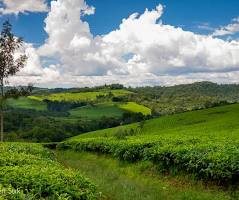
The plant that started here, grown all over again.
Robusta coffee is native to Uganda's forests — not just grown here, but originally from here, with a cultural role that predates export coffee entirely. Add the greener, quieter tea estates of the west, and Uganda's coffee and tea story is worth a stop in its own right.
Uganda's coffee is a native story, not just an export crop
Robusta coffee grows wild in Uganda's forests and has done for centuries, long before it became a global export commodity. In traditional Buganda culture, coffee beans — chewed rather than brewed — played a ceremonial role in friendship and oath-taking rituals, a use that predates the coffee industry entirely and sets Uganda apart from origin stories built purely around Arabica and export farming.
Where the two coffee types are grown
Robusta thrives at lower altitude across central and western Uganda, while the country's Arabica is grown at higher elevation on volcanic soil — chiefly on Mount Elgon's slopes around Sipi Falls (Bugisu Arabica) and in the Rwenzori foothills.
- Sipi Falls, Mount Elgon — Bugisu Arabica, with farm and washing-station visits
- Fort Portal & the crater lakes — mixed smallholder coffee gardens amid the tea
- Rwenzori foothills — high-altitude Arabica on volcanic soil
Tea country in the west
Uganda's tea estates cluster in the cooler, wetter western highlands around Fort Portal and Kanungu — rolling, brilliant-green plantations that make for some of the country's most photogenic drives, often glimpsed en route between Kibale and Bwindi rather than visited as a standalone stop.
Farm visits, tastings and buying direct
Most coffee farm visits include a walk through the gardens, a demonstration of the full process from cherry to cup, and a tasting — usually arranged directly with small cooperatives, so a meaningfully larger share of what you pay reaches the farmers than a supermarket bag ever would.
What travellers ask us most.
Can I visit a working coffee farm?+
Yes — Sipi Falls on Mount Elgon and the Fort Portal crater lakes area both offer guided farm and washing-station visits, usually combined with a tasting.
What's the difference between Uganda's Robusta and Arabica?+
Robusta is native to Uganda's lower-altitude forests and has deep cultural roots; Arabica is grown at higher elevation on volcanic soil, chiefly around Mount Elgon and the Rwenzori foothills, and tends toward a milder flavour profile.
Can I buy coffee to take home?+
Yes — most farm visits and cooperatives sell roasted or green beans directly, and it's one of the most genuine souvenirs available.
Is a coffee tour worth adding to a wildlife-focused itinerary?+
It pairs naturally with Kibale or the crater lakes near Fort Portal, since you're passing directly through coffee country either way.
Still have questions?
Tell us where you're headed and we'll fold the details into your itinerary.