
Over 1,000 species, one country.
Uganda's bird list runs past 1,000 recorded species — more than Kenya and Tanzania combined, in a country roughly the size of the United Kingdom. It's not a side note to a safari here; for serious birders, it's the reason to come.
Why Uganda leads Africa for birding
Uganda sits at the overlap of East and Central African bird zones, adds the Albertine Rift's unusually high endemism, and packs an exceptional range of habitat — lowland rainforest, savanna, papyrus wetland and Afro-alpine moorland — into a compact, accessible area. Few countries anywhere let you cover this much habitat diversity in a single two-week trip.
Where to go for what
Each region delivers a genuinely different bird list, which is why serious birding itineraries here move between several sites rather than settling on one.
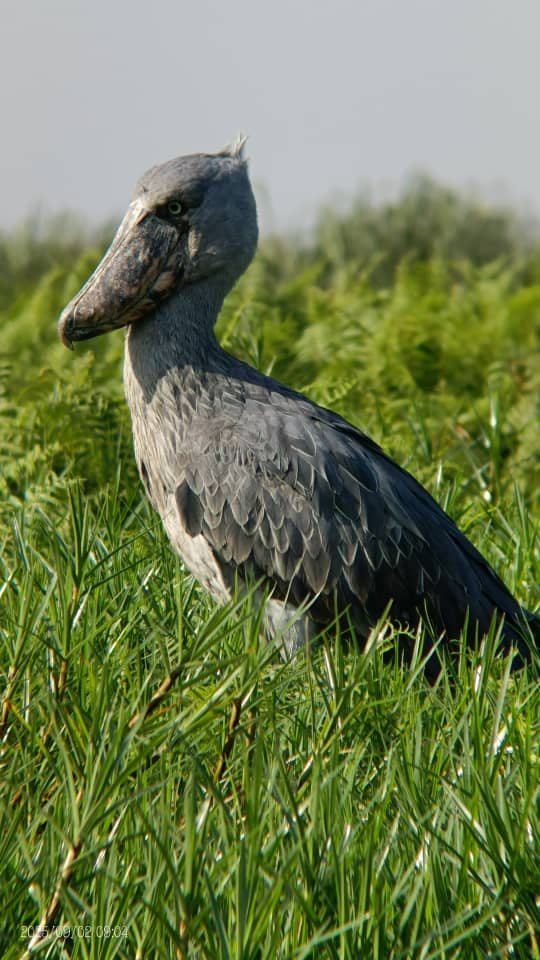
- Mabamba Swamp, near Lake Victoria — the classic shoebill stork canoe trip
- Bwindi Impenetrable — Albertine Rift endemics found nowhere else on Earth
- Semuliki — Congo-basin lowland species shared with Central Africa
- Kazinga Channel, Queen Elizabeth — pelicans, kingfishers and fish eagles
- Kidepo Valley — dry savanna specialists found nowhere else in Uganda
- Mount Elgon & Sipi Falls — highland forest species amid the coffee terraces
Signature species to look for
A shortlist of the birds that draw people to Uganda specifically, rather than birds you might see on any East African itinerary.
- Shoebill stork — tall, still, and famously prehistoric-looking
- Grey Crowned Crane — Uganda's national bird, with an elaborate courtship dance
- Great Blue Turaco — Africa's largest turaco, common in western forests
- African Fish Eagle — the iconic call of every lakeshore and river
- Papyrus Gonolek — a wetland specialist found in papyrus swamp
- Shelley's Crimsonwing — one of Bwindi's rarer Albertine Rift endemics
What travellers ask us most.
Is the shoebill sighting guaranteed?+
No wild sighting is ever guaranteed, but Mabamba Swamp and the Murchison Falls delta offer consistently good odds thanks to local guides' knowledge of current nesting and feeding areas.
Do I need a specialist birding guide?+
For a serious birding trip, yes — we pair birding itineraries with guides who specialise in identification and calls, distinct from a standard safari guide.
When is the best time for birding?+
Birding is strong year-round, but November–April adds Palearctic migrants to the resident species, giving the longest possible checklist.
Can birding be combined with gorilla trekking?+
Yes — Bwindi itself is a strong birding site, so a gorilla trekking trip there naturally doubles as birding time on the lower forest trails.
Still have questions?
Tell us where you're headed and we'll fold the details into your itinerary.