Inside Uganda's Community Conservation Model
It's easy to think of a national park boundary as a simple line on a map — wildlife inside, people outside. In Uganda, that line has always been more porous, and more contested, than the postcards suggest. Families farmed land that later became protected forest. Elephants still raid crops just beyond park edges. Conservation here has never been just a wildlife question; it has always also been a neighbours question.
The model that's evolved in response is built on a fairly direct principle: if a family living beside a national park earns more from the wildlife inside it staying alive than they would from poaching it, conservation and community interest start pointing the same direction. A share of park entrance and permit revenue — including a meaningful percentage of every gorilla permit sold — is legally required to flow back into the communities bordering the parks, funding schools, clinics, and roads.
That revenue-sharing sits alongside direct employment: many rangers, trackers and guides working in and around Bwindi, Murchison and Queen Elizabeth today grew up in villages on the park boundary, and know the terrain — and the wildlife's habits — from a lifetime spent nearby, not from a training manual alone.
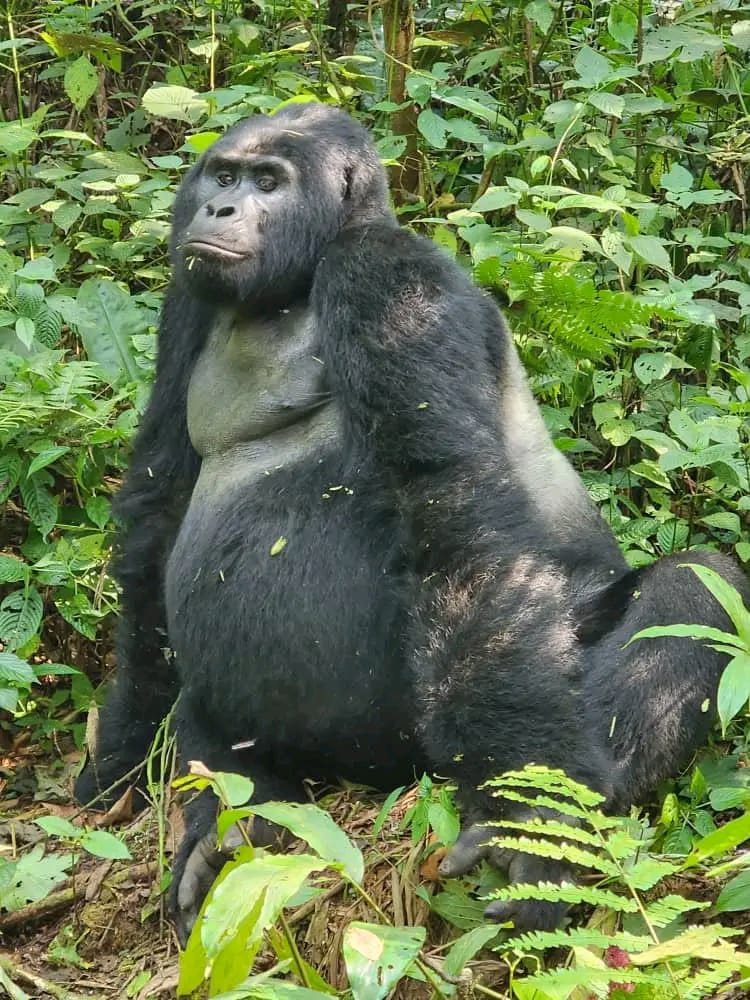
It isn't a finished project. Human-wildlife conflict, particularly crop-raiding by elephants and baboons near park edges, remains a genuine source of tension, and revenue-sharing agreements only work when they're honoured consistently. But the shift over the past three decades — from conservation done to communities, toward conservation done with them — is a large part of why mountain gorilla numbers have actually grown even as human population pressure around the parks has intensified. It's imperfect, but it's working.